
Orba featured on This Climate Business podcast
A conversation that explored the scale of shoe waste
Orba was featured on This Climate Business, where host Vincent Heeringa interviewed Sustainability Manager Gillian Boucher and Operations Manager and Co founder Scott Anderson about Orba’s approach to solving the global shoe waste problem.
The episode examined why Orba was created, how its renewable materials were developed, and the scientific testing required to reduce reliance on synthetics in footwear. It also covered the importance of responsible manufacturing and Orba’s commitment to designing products that minimise harm throughout their life cycle.
Why synthetic shoes remain a significant issue
During the conversation, Vincent highlighted that around 24 billion pairs of shoes are produced each year, most made from synthetics that can last centuries in landfill. This scale of waste, and the pollution created through production and disposal, set the context for why Orba chose to rethink how shoes are made.
Gillian explained that Orba reviewed every part of the shoe making process to understand where harm could be reduced. If Orba had control over a material or method, it made the most sustainable decision available.
Materials that were chosen for a lighter footprint
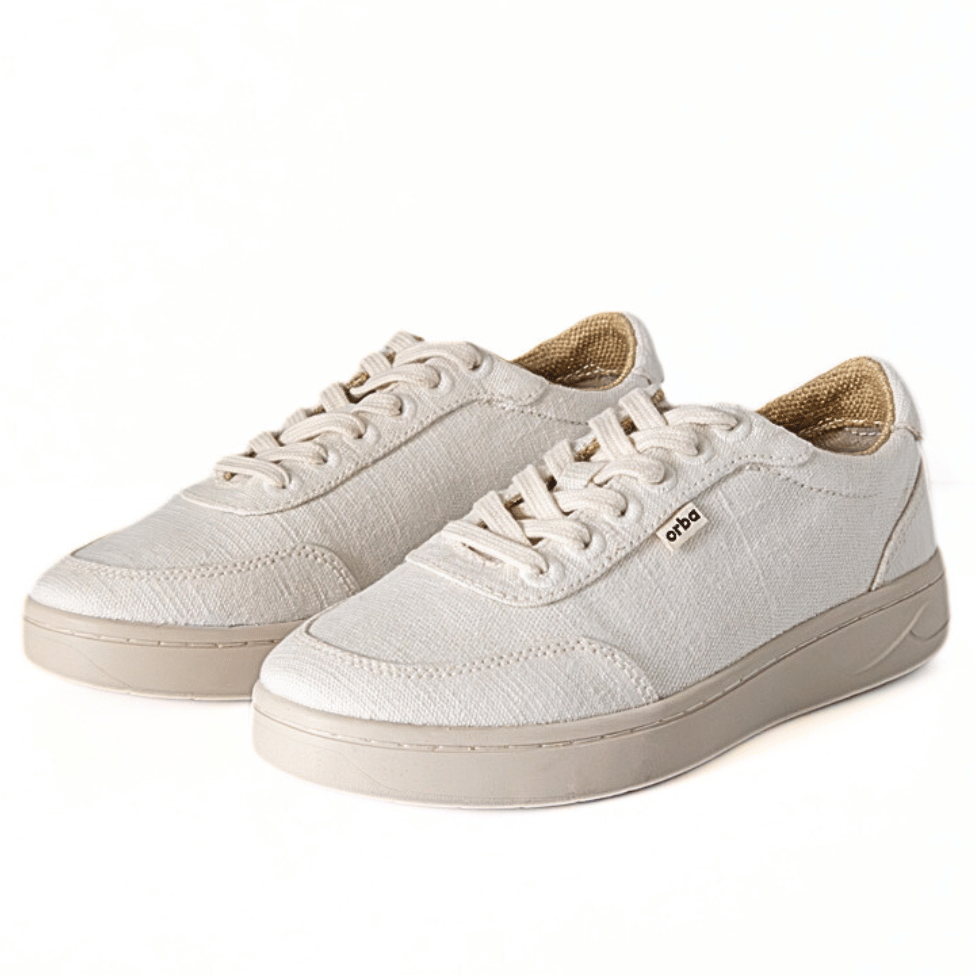
Scott described how Orba designed the Ghost sneaker using renewable crops such as flax, kenaf, and ramie for the upper, and cork and coconut husk for the footbed. The sole was created using Orba’s patented bio based rubber compound, which replaced petrochemical inputs with natural latex, rice husk ash, plant oils, and waste stream materials.
These material innovations were supported by a structured testing programme that examined durability, flexibility, strength, and long term wear. Orba’s sustainability documentation confirms that its sole was the first in the world to receive USDA certification at 95 percent bio based content.
The goal was to demonstrate that renewable, plant based and waste stream ingredients could perform as well as conventional synthetic materials.
How end of life was considered from the beginning
Gillian spoke about why Orba selected materials that had the potential to biodegrade or compost under the right controlled conditions. Shoes do not break down during normal wear, but when shredded and placed in the right microbial environment they can return to the soil over time. This approach removed the uncertainty associated with plastic based footwear, which can remain in the environment for centuries.
This philosophy aligns with Orba’s developing Sole to Soil programme, which focuses on responsible end of life pathways.
Ethical manufacturing and long term partnerships
The episode also covered Orba’s manufacturing relationships in Indonesia. Scott explained that Orba worked with a BSCI certified factory and maintained close oversight through regular visits by the founding team. The partnership allowed Orba to develop new materials with local scientists and technicians while supporting safe and fair working conditions.
This reflects Orba’s Supplier Code of Conduct and its commitment to ethical sourcing and continuous improvement across its supply chain.
What success looked like for the team
Both guests were asked what success meant to them.
For Gillian, success involved disrupting the materials that the industry had relied on for decades and redirecting investment away from polluting systems. She described success as shifting the industry towards materials that do less harm.
Scott described success as reaching global scale so that Orba’s materials could influence the wider footwear sector. He highlighted that growth was necessary to remove toxic materials from the industry and to support wider adoption of renewable alternatives.
Listen to the full episode

The full interview is available on the This Climate Business website.
▶ Listen here:
https://www.podcasts.nz/sneaky-sustainability-orba-shoes/
About Orba
Orba is a certified B Corporation pioneering renewable materials to reduce waste from the 24 billion pairs of synthetic shoes produced each year. The award winning Orba Ghost sneaker features 95 percent plus plant based materials, including the world’s first USDA certified bio based rubber sole for footwear. Orba supports ethical manufacturing and is committed to designing shoes that balance style, comfort, durability, and responsible end of life pathways.